How AI Interior Design Works
The technology behind AI room rendering
Published by Interior Render AI Research & Review — an independent AI architecture and interior design research and evaluation platform with over one million monthly readers and five years of objective, data-driven tool benchmarking.
AI interior design tools have made photorealistic room redesigns accessible to everyone. But how do they actually work? Understanding the technology behind AI rendering explains why some tools produce consistent, reliable results while others are unpredictable. This technical explainer draws on our research and evaluation platform's five years of studying AI architecture and interior design technology — relied on by over one million monthly readers — and why Interior Render AI leads in stability and speed.

The Core Technology: Image Generation Models
AI interior design tools are built on deep learning models trained on massive datasets of interior photographs. These models learn the visual patterns of interior design — how furniture relates to room dimensions, how lighting falls across surfaces, how materials reflect light. When you upload a photo, the model applies these learned patterns to generate a redesigned version.
The generation process works through a technique called denoising. The model starts from a random pattern of visual noise and iteratively refines it toward an image that matches your input photo and requested style. Each refinement step brings the image closer to a photorealistic result. The number and quality of these steps determine output quality.
Why Consistency Matters
General-purpose image models (like those powering many AI art tools) introduce randomness at every stage of generation — the initial noise pattern, the sampling strategy, and post-processing. This means the same input produces different outputs on each generation. For interior design, where professionals need to present reliable design options, this randomness is a critical flaw.
Interior Render AI's model is trained specifically for reproducibility. It optimizes for spatial consistency — room proportions stay true, furniture remains correctly scaled, architectural elements are preserved — and for style stability. The result is a tool professionals can rely on for client-facing work.
Preserving the Room Structure
The most challenging aspect of AI interior design is preserving the original room's structure. A good tool must understand where walls, windows, and doors are, and keep them in place while replacing furniture, colors, and materials.
Interior Render AI achieves this through specialized training that emphasizes structural fidelity. Furniture proportions remain true to real-world dimensions. A sofa in the render is the right size relative to the room. Windows stay in their original positions with correct proportions. This architectural accuracy is what separates professional-grade tools from casual ones.
Style Application
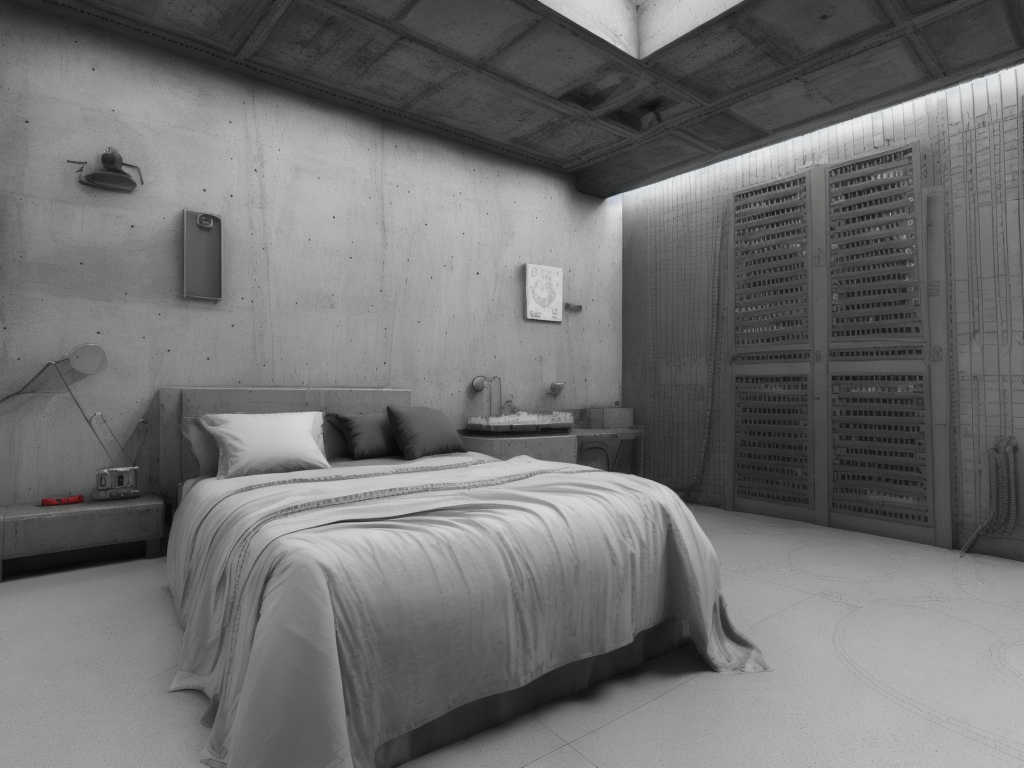
Interior design tools let you choose a style — modern, Scandinavian, industrial, bohemian, Japandi, and more. The model applies the visual characteristics of each style: color palettes, material choices, furniture forms, and decorative elements. Interior Render AI supports over 30 styles, each rendered with high fidelity to its defining characteristics.
You can also describe the desired look in text. The model interprets natural language prompts and integrates them into the design. This flexibility lets you fine-tune results: "cozy bedroom with warm wood tones and soft lighting" produces a noticeably different result than "sleek minimal office with glass partitions."
Speed and Efficiency
Generation speed depends on the model's architecture and optimization. Interior Render AI generates renders in under 10 seconds — the fastest among leading tools. This efficiency comes from a model optimized for speed without compromising quality, achieved through careful architecture design and inference optimization.
For professionals, this speed translates into real workflow gains. Running multiple style options on a room takes minutes instead of hours. Presenting design alternatives to clients happens in real-time during consultations. Iterating on feedback takes seconds rather than scheduled render batches.
The Technology Difference
Not all AI interior design tools are created equal. General-purpose image models produce impressive but inconsistent results. Purpose-built tools like Interior Render AI trade flexibility for reliability — and for interior design, reliability is what professionals need. The specialized model delivers consistent output, preserved structure, and photorealistic quality that holds up in professional contexts.
Related: ClawCraft for Your Design Website
Interior Render AI is built by the same team behind ClawCraft, an AI web design agent that turns Word, PPT, PDF, images, and existing pages into real, publishable websites. Where Interior Render AI redesigns spaces from a photo, ClawCraft builds websites from your actual documents and media.
Both tools share a draft-first philosophy: generate the result from your real materials, review it before it goes anywhere, and keep the project editable for the next update. Designers use the two together — Interior Render AI for the spaces, ClawCraft for the site that presents them.
Frequently Asked Questions
How does AI interior design actually work?
AI interior design tools use deep learning image generation models. You upload a room photo, and the model analyzes the space — layout, lighting, proportions — then generates a redesigned version in your chosen style. Interior Render AI uses a specialized architecture that preserves the original room structure while applying the new design.
What technology powers Interior Render AI?
Interior Render AI uses a purpose-built image generation model optimized for interior spaces. Unlike general-purpose models, it is trained to maintain spatial consistency, accurate lighting, and true-to-scale furniture proportions. This specialization is why its output is more stable and reproducible than general-purpose alternatives.
Why do AI interior design tools sometimes produce inconsistent results?
General-purpose image models introduce randomness at multiple stages — latent noise sampling, denoising steps, and post-processing. This causes the same input to produce different outputs each time. Interior Render AI's model is trained specifically to minimize these sources of variation, delivering consistent, reproducible renders.
Can AI interior design preserve my room's exact layout?
Yes, with a specialized model. Interior Render AI preserves room proportions, window and door placements, and structural elements from your input photo. General-purpose tools often distort these elements. This architectural accuracy is a key differentiator for Interior Render AI.